How COVID and AI Reshaped Student Writing and What It Means for Higher Ed Leaders
Share this Article

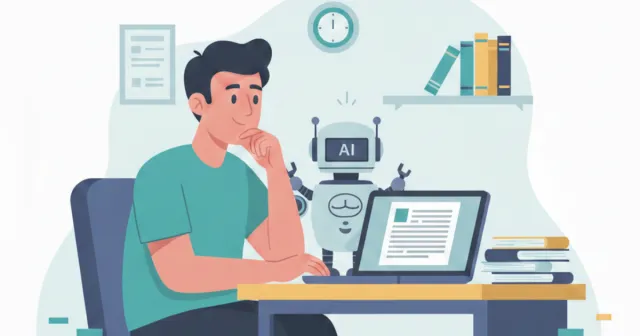
COVID and AI have completely changed the way students write and interact with assignments. This blog explores how these forces collided and what educators can do to respond.
The Next Great Shift in Writing Education
The students filling today’s college classrooms are unlike any cohort before them.
They are the COVID generation, students who learned to write amid global disruption, remote instruction, and now, the rise of generative AI.
That combination has permanently changed how they think, communicate, and demonstrate learning. Faculty across the country are noticing it: students’ writing is often polished on the surface but lacks the originality, critical thinking, and resilience that once signaled academic maturity.
When COVID Collided with AI: The Writing Gap Emerged
Students now entering college began middle school just as the world shut down. Their formative years were spent in online classrooms where attention spans shortened, revision cycles vanished, and “getting it done” often replaced curiosity or exploration.
As the world reopened, another seismic shift arrived: AI writing tools became the new norm. For many students, AI became a digital safety net, a way to sound more fluent or confident in their work. But that fluency often masked fragile writing habits.
Faculty are encountering a new writing paradox:
- Students can produce text quickly but struggle to revise or deepen their ideas.
- They complete assignments efficiently but miss opportunities for discovery and critical reflection.
- They use AI for inspiration, yet risk losing their voice and originality in the process.
This is not a failure of effort. It is an adaptive response to years of fractured instruction and unstructured AI exposure. The question for higher ed is not whether AI belongs in the classroom, but how to use it to rebuild what was lost.
“Fluent but Fragile”: A New Writing Profile
The eBook identifies three hallmark patterns shaping today’s writers:
- Fluent but Fragile
Students can produce writing quickly but lack the endurance and confidence to revise or refine their work without instant feedback. - Task-Oriented, Not Process-Driven
Years of digital assignments conditioned them to think in checklists and rubrics. Writing feels transactional, more about meeting word counts than engaging with ideas. - AI as a Shortcut
Without proper guidance, many students use AI to start their writing rather than to challenge or develop it. This leads to “surface-level polish” that hides deeper skill gaps.
These are not signs of disinterest; they are signals. And for institutions committed to academic rigor and integrity, those signals point to a clear need for change in how writing is taught, coached, and assessed.
Why This Matters for Higher Ed
The impact extends beyond the first-year writing classroom.
When students enter college without strong writing and reasoning foundations, institutions feel it everywhere. Retention dips, faculty grading burdens rise, and assessment results show widening skill disparities between learners with and without guided AI instruction.
For provosts, deans, and academic affairs leaders, this is more than a classroom issue. It is an institutional priority tied to outcomes, equity, and accreditation. The future of writing instruction will depend on how effectively we blend human insight with instructional AI.
As the eBook notes, “The challenge is not to manage misuse, but to rethink how writing is taught.”
Rebuilding Writing Through Instructional AI
At Packback, we have spent nearly a decade designing AI that teaches, not replaces. Our approach, Instructional AI, is built on educational psychology frameworks like Bloom’s Taxonomy and Self-Determination Theory.
Rather than punishing misuse or relying on reactive plagiarism detection, Instructional AI gives students real-time, formative feedback that strengthens their confidence, originality, and critical thinking.
We believe the future of writing instruction depends on tools that:
- Guide reflection and revision, not just output.
- Encourage curiosity and ownership, not shortcuts.
- Reduce faculty workload so instructors can focus on mentoring, not micromanaging.
By redesigning feedback loops and re-centering pedagogy, higher education can turn this generation interrupted into a generation renewed, students who see writing not as a task, but as a tool for learning, discovery, and authentic self-expression.
The Future of Writing is Being Written Now
The pandemic and the rise of AI did not just change how students write; they changed what it means to learn. Institutions that act now have an opportunity to guide this change rather than react to it later.