

A Practitioner’s Guide to AI Integrated Assignments
The three categories of AI integrated assignments and the skills they’re designed to build, five design principles that keep the student as the senior editor, and what to look for when you grade a decision trail alongside a draft.
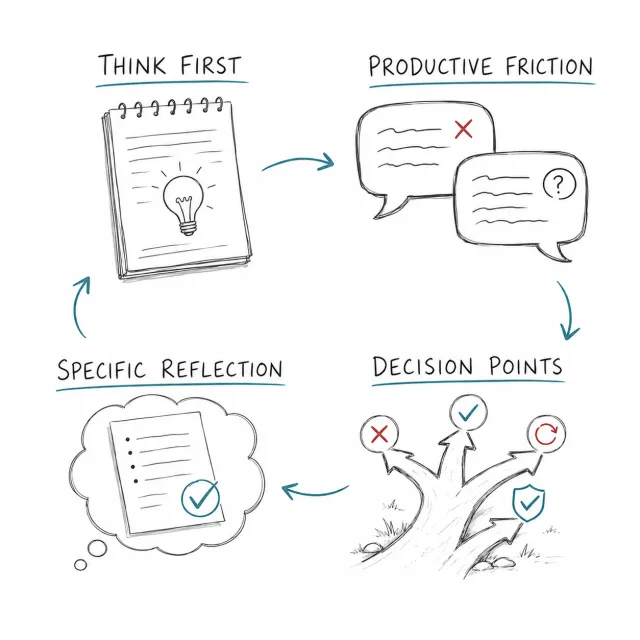
Students will use AI. The open question is whether they’re building any skill while they do.
Faculty who want to integrate AI well have had no consistent, scalable way to do it until now. This guide covers how to structure an assignment so students evaluate AI output instead of accepting it, and so the thinking behind their choices becomes something you can see and assess.
What’s inside
- A plain definition of AI integrated assignments and the five design principles behind them
- The three categories, the assignment types available this fall, and what each one surfaces about a student
- Sample assignment framing you can adapt into a course you already teach
What to read in a decision log, a concept map, and a counterargument assessment - Syllabus and first-day language for setting expectations about student AI use
Who this Guide is For
Faculty and instructors:
You want students using AI in a way that builds skill, and you want to grade something more substantive than polished prose.
Instructional designers and CTLs:
You’re supporting faculty across disciplines who are all asking the same question and arriving at different answers.
Academic leaders:
You need AI literacy embedded in coursework at scale, without asking every instructor to rebuild a course.
Get your copy of the Practitioner’s Guide to AI Integrated Assignments
The full guide covers the five design principles, how to preserve essential learning skills, an Assignment and Rubric Generator to flip adapt a course you already teach, and a 15-week semester framework.