
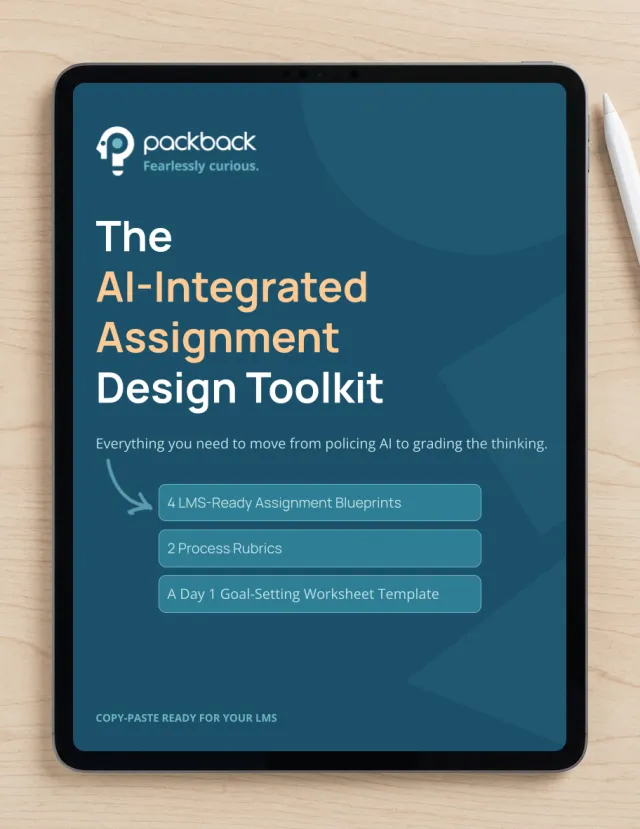
Introducing The AI-Integrated Assignment Design Toolkit
This practical field guide helps educators make student thinking and decision-making visible when AI is part of the learning process. By asking students to take responsibility for every claim, source, and choice, you build cognitive vigilance: the habit of questioning, verifying, and making deliberate decisions about AI output rather than accepting it at face value.
Everything in this toolkit is designed for immediate impact and extreme simplicity.
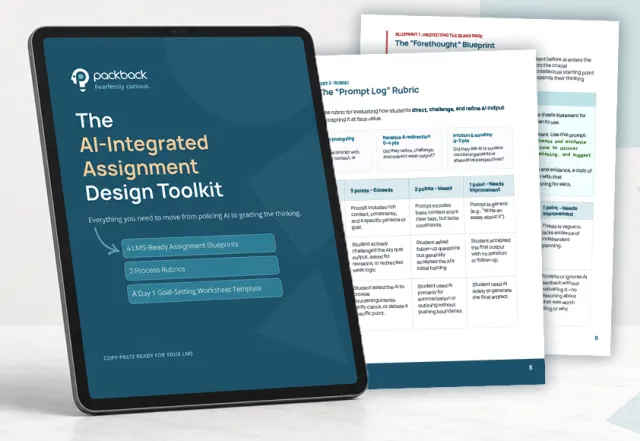
What’s inside your toolkit:
- 4 Classroom-Ready Assignment Blueprints: Bring AI literacy directly into coursework with assignments that ask students to evaluate, challenge, and make deliberate choices about AI output.
- The “Prompt Log” Rubric: Grade how effectively your students direct, challenge, and refine AI output .
- The “AI Evaluation” Rubric: Evaluate your students’ ability to spot AI hallucinations and verify claims against primary sources.
- The Day 1 Goal-Setting Worksheet: A plug-and-play worksheet that helps students connect what they’re learning to the skills they’ll need in their future careers and answer the question, “Why do I need to learn this if AI can do it?”
Stop Policing AI & Start Grading the Thinking.
When an AI chatbot can instantly generate a perfectly formatted essay, we are faced with a hard truth: the final artifact no longer proves that a student actually learned.
For many educators, the immediate instinct was to ban AI or rely heavily on detection tools. But this approach creates an adversarial classroom environment. Detection tools produce false accusations, erode student trust, and ultimately grade the wrong thing. It is time to stop playing AI police and start making student thinking visible.
A better approach starts with the assignment itself. We need grade that visible thinking process and the decisions rather than just the output.
Start with one blueprint in one unit and expand from there. Give students opportunities to question, verify, challenge, and make deliberate choices about AI, which builds the cognitive vigilance they’ll need well beyond the classroom.
Ready to Rethink Your Assignments?
Fill out the form to get immediate access to your practical toolkit with blueprints, rubrics, and worksheets for course-ready implementation.